Last year I printed an edition of books featuring pictures of wrecked cars called Twisted Metal. The subject matter feels settled (at least for now), so I’ve been wanting to reflect on how I landed on it as an object of obsession and developed this interest into a photographic subject. The blurb I wrote to accompany the publication at the time of release was rushed, insufficient, and terse. I really wanted to get it out the door so I could make it the last project I ever felt I had to promote on Mark Zuckerberg’s Instagram before deleting my account. Revisiting this project after a year of stewing on it feels worthwhile- it was the first thing I worked on out here on the West Coast that really made me feel animated after being in a long slump, and I feel like the framework I worked with to isolate autobody damage as a worthy picture source is the same framework I’ve worked with on every project since.
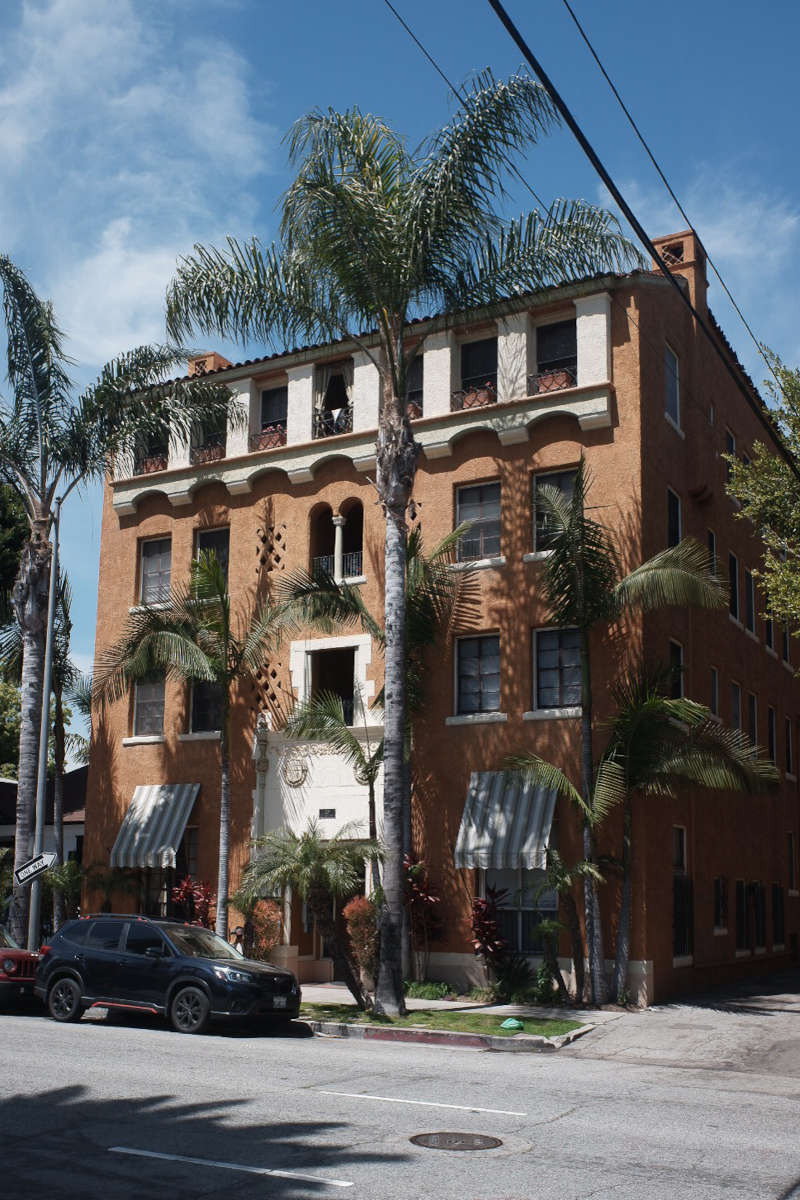
To start, I had just moved to Long Beach from Hollywood and had been laid off from a funny job photoshopping fake shadows under liquor bottles for a Doordash clone. I had plenty of time to think about taking pictures in between drafting cover letters and filling in fields on Indeed, but no gas money to go forth and gawk at the distant subjects I’d been obsessed with like the desert and the dry lakes and the aqueducts. So mostly I was just walking across the street in the Willmore City neighborhood, and I was photographing buildings. This little section of long beach has an exemplary collection of vernacular architecture. One of the oldest parts of the city, it is host to craftsman and faux-craftsman houses, Victorian manors, bungalows and bungalow courts, charming early iterations of the now ubiquitous 5-over-1, mission style complexes, and variations on the dingbat. A whole new world of whimsical proletariat and middle class housing compared to the endless warrens of mill buildings and triple deckers I grew up with on the east coast.
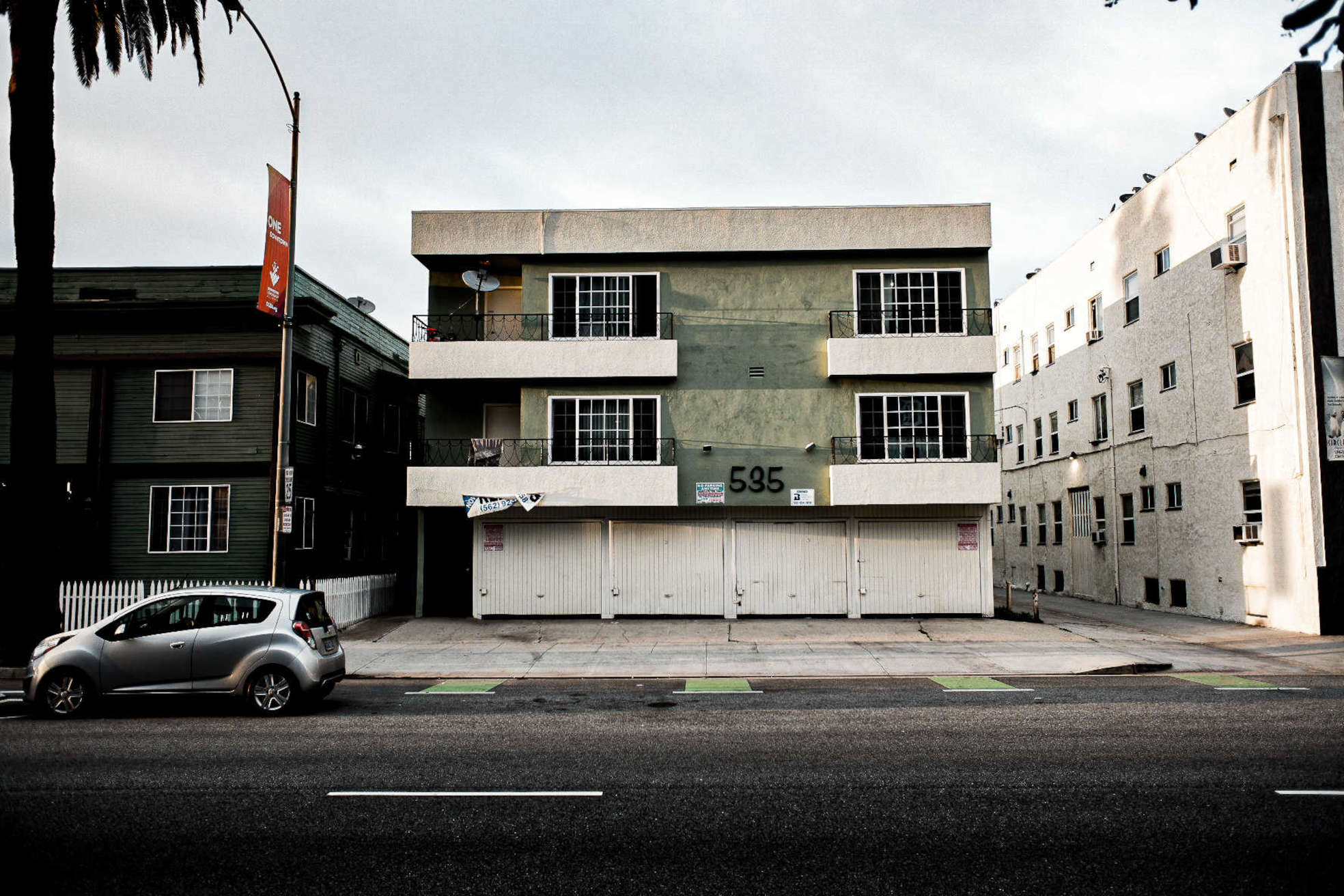
What chafed me as I was photographing these structures was the practical impossibility of taking a picture of a building without a parked car in the frame. It is all street parking in LBC, and designed for a period when there were less cars on the road. The shortage of garages and driveways meant any attempt to frame a full building on the lens I had available to me would have at least one car (and more often, a wall of them) obstructing the ground floor of my subject. I had some luck tracking which days were street sweeping days so I could try to squeak in a view early in the morning on a bare street, a project difficult to manage and putting me at the mercy of early morning lighting conditions. That and forcing me up at 7am to run out the door to take a picture of an apartment complex. The inescapable urban visual noise of the parked car irked me enough that I mostly abandoned this effort.
During this time I was parking my own vehicle at the city place garages downtown, which was where I came across the prime specimen (pictured below) which made me see the potential in autobody damage and which was the first keeper for the series. A maroon sedan with a totally shredded quarter panel, the door to the gas tank ripped off, the gas cap floating in an inky black void like a big bloodshot eyeball. This little globular formation surrounded by a field of white rubbed to maroon, some flaking material with the texture of crushed aluminum foil or plaster. Dented, sandblasted metal, the upside logo of some brand of adhesive tape embossed into the frame.
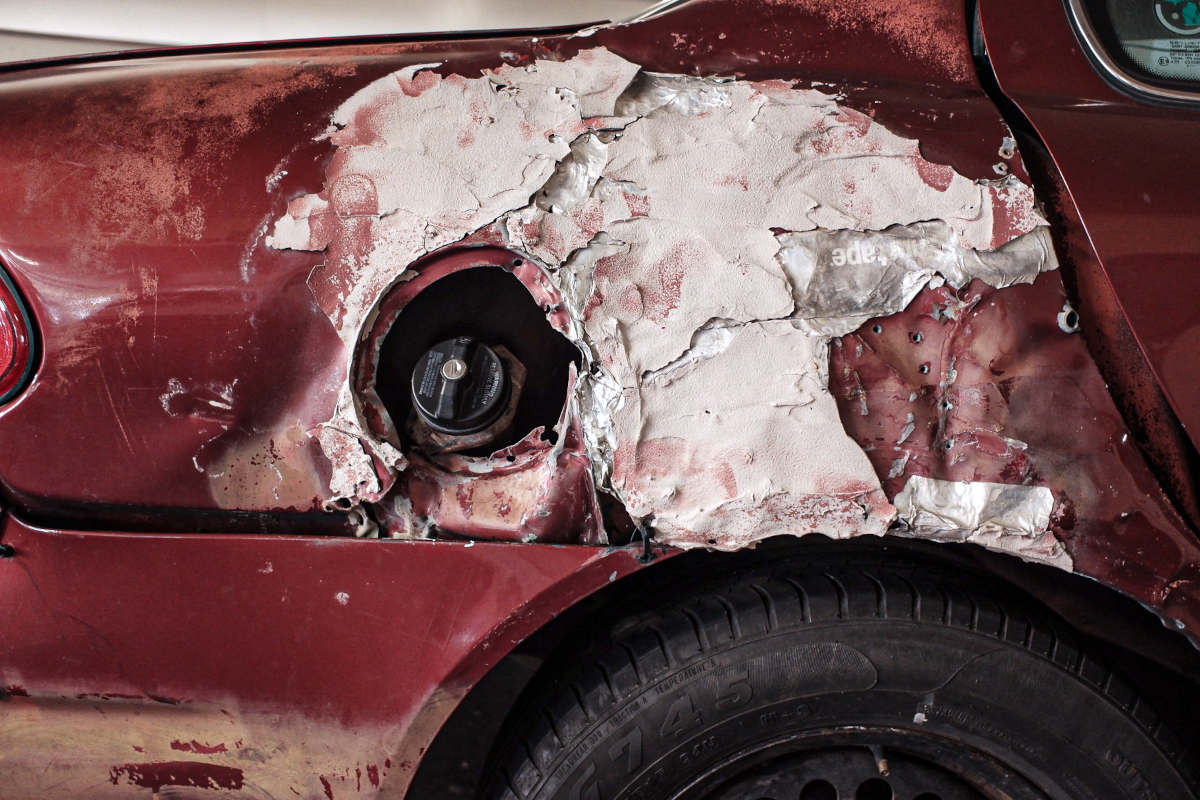
The effect was something like an oil painting if you took a pad of sandpaper to it. It’s a dionysian surface, like a Rothko in its two tone field of colors. What I had found in the image of this car was my own corollary to the language of Aaron Siskind’s abstraction, his black and white prints of chipped and peeling paint, corroded surfaces and torn posters. A language mysterious in its seemingly arbitrary, organic, harsh composition- but lucid in its concrete origin as a real object or surface photographed outside a studio. In fact a wholly pedestrian visual syntax once you begin to look for it. Learning to be able to see like this and to look for sources of this kind of language to bind into a frame had been very important to me in an earlier time when I was quite bored and had felt my world had shrunk. I think working in this mode becomes quite appealing when you’re in a boring situation- you can start looking at sticks in the water or tire tracks in mud through your viewfinder with earnest fascination and fool yourself into thinking you don’t need to travel to Tokyo or Venice to make exciting pictures with your camera.
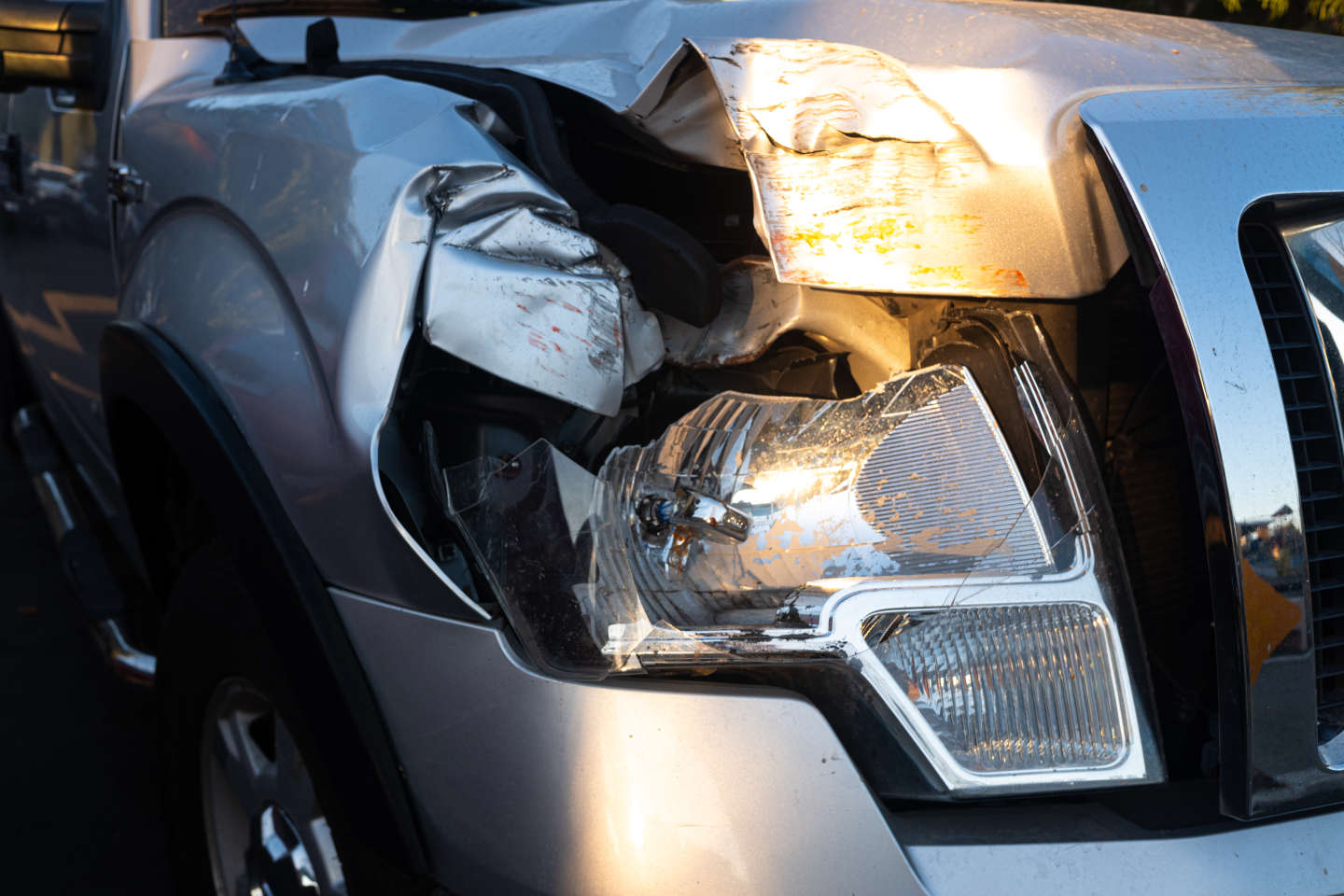
Once I saw this one car with open eyes, I started noticing just how many damaged cars were in my neighborhood. Every day with the street parking it was like a deck of cards being shuffled- there were some standout cars exhibiting extreme damage that rarely moved (if they could at all) from their spots on the curb, but I could see some new and novel damage of all stripes every day. I could walk down five blocks over five streets and scan every vehicle parked perpendicular to the curb, and maybe one in every fifty has some sort of major, interesting damage, and it won’t be there tomorrow, or it will be somewhere else where the light hits it better or opportunities to photograph it are more ideal. Certain types or classifications of damage began to emerge and form a pattern- dented bumpers and cracked light housings, vicious scratches along the doors from close parking encounters, crumpled engine compartments from distracted moments approaching a red light. Ad hoc repairs- bumpers zip tied or excessively duct-taped together, plastic bags taped over shattered windows.
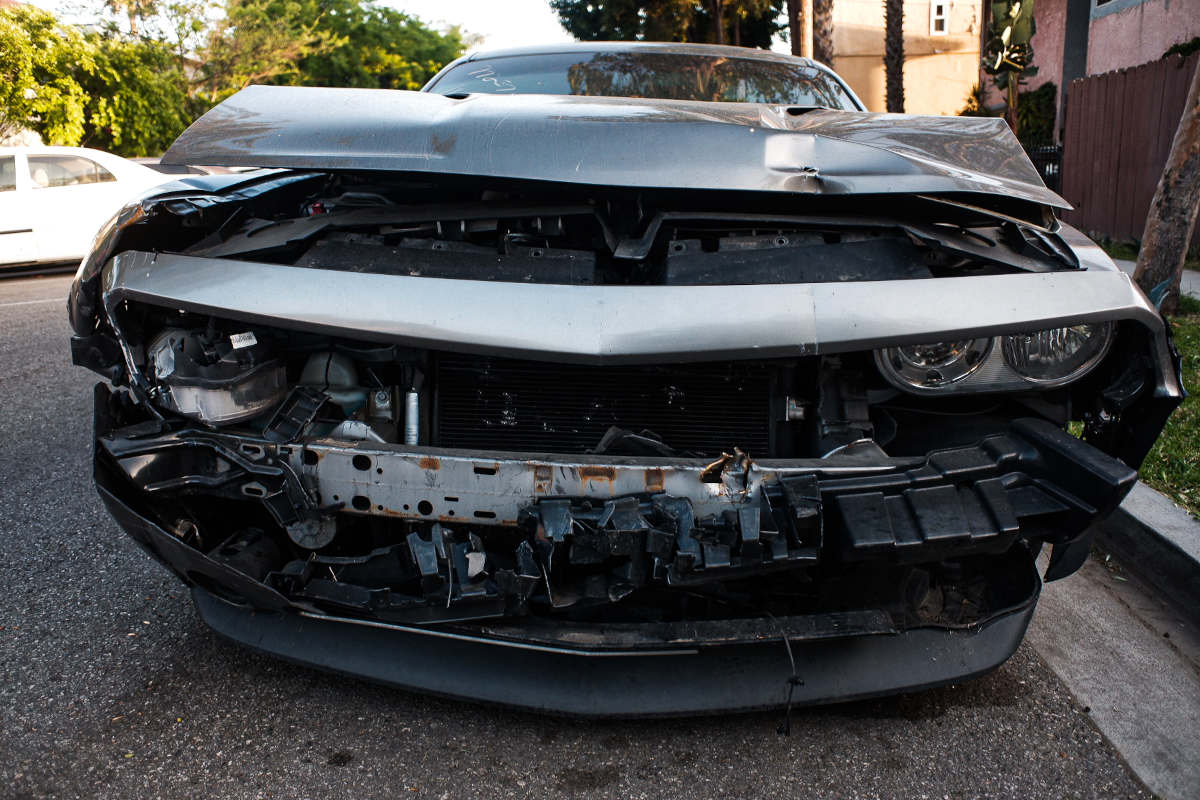
Personal grievance was a component of the selection criteria. The nicer the car the better. A banged up ‘98 Corolla held together with superglue and string is admirable and interesting to look at but not dramatic in the way a completely accordioned mustang is. My first job in LA was monitoring the parking garage at the Petersen Automotive Museum, a miserable experience that led me to develop a contempt for a certain type of Car Person. Coming across wrecked Range Rovers, Teslas, and particularly Chargers and Challengers on my safari was an excellent source of schadenfreude. It’s not hard to find a devastated Hellcat in Long Beach- I can go out and find one of these budget American muscle cars in a sorry state any time.
In the end after running this idea into the ground I had a mass of 200 or so images to whittle down into the book. I stopped shooting once this approach to highlighting damage began to feel programmatic. Done as it is, it was in retrospect the beginning of a new approach for me. Not only was this my first attempt at a coherent body of work in color, but also the inauguration of a “project” approach to making work. Looking for something wrong in a scene and drilling down into it. Covered cars and covered houses, messy yards, faux castles in the architectural landscape, oil pumps in the suburban sprawl. I can realistically only explore so much of my environment when I’m compelled to work, but with a categorical approach I can find something every day that glimmers in the little ground that I can cover, growing my little collection of diamond nothing.